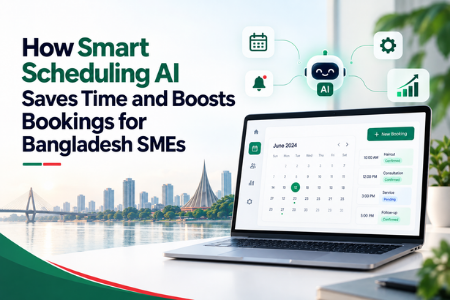
Appointment booking software has become essential for businesses that rely on meetings, consultations, demos, or service appointments. Instead of endless back-and-forth emails to find the right time, modern scheduling tools allow customers to book appointments instantly based on real-time availability.
In 2026, appointment booking platforms go far beyond simple scheduling. Many now include automated reminders, payment collection, CRM integration, and even AI-powered assistants that confirm or reschedule meetings automatically.
Below are some of the best appointment booking software platforms in 2026 that businesses of all sizes can use.
1. PowerinAI
PowerinAI is more than just an appointment scheduling tool. It combines AI chatbot automation, lead qualification, and meeting booking in one system. Instead of simply providing a calendar link, PowerinAI can interact with website visitors or incoming messages, answer their questions, qualify their intent, and automatically schedule meetings with the appropriate sales representative.
This approach makes scheduling part of a complete sales automation workflow rather than a standalone feature. Businesses can embed the booking system on their website, integrate it with messaging platforms, and automatically send confirmations or reminders.
PowerinAI is particularly useful for companies that want to automate lead qualification, appointment scheduling, and sales follow-ups in one place.
2. Calendly
Calendly is one of the most widely used appointment scheduling platforms in the world. It eliminates back-and-forth communication by allowing users to share a booking link where clients can choose available time slots directly from the calendar.
The platform integrates with tools such as Google Calendar, Outlook, Zoom, and CRM systems. Businesses can create different meeting types such as one-on-one sessions, group meetings, or team scheduling. Because of its simplicity and reliability, Calendly is often the first scheduling tool adopted by freelancers, agencies, and sales teams.
3. Acuity Scheduling
Acuity Scheduling is a powerful appointment management platform often used by consultants, coaches, and service-based businesses. The software allows customers to book appointments online while automatically handling confirmations, reminders, and calendar synchronization.
One of Acuity’s major advantages is its built-in client management and payment features, allowing businesses to accept payments, collect intake forms, and manage customer profiles directly from the scheduling system. This makes it ideal for businesses that need both scheduling and administrative tools.
4. Setmore
Setmore is a user-friendly and budget-friendly scheduling platform designed for startups and small businesses. It allows companies to create an online booking page where customers can schedule appointments without contacting staff directly.
The platform also supports email and SMS reminders, helping reduce no-shows and missed meetings. Setmore integrates with calendars, payment tools, and social media platforms, allowing businesses to accept bookings from multiple channels. Its free plan makes it particularly attractive for small teams.
5. Zoho Bookings
Zoho Bookings is part of the Zoho ecosystem and works seamlessly with other Zoho tools such as Zoho CRM and Zoho Mail. Businesses can create branded booking pages where clients can schedule appointments and receive automated confirmations.
The platform supports payment integrations, customizable forms, and detailed scheduling rules. For organizations already using Zoho products, Zoho Bookings offers a highly integrated scheduling solution that fits smoothly into existing workflows.
6. SimplyBook.me
SimplyBook.me is a flexible scheduling platform widely used by service-based businesses such as salons, healthcare providers, and consultants. It allows businesses to create fully customizable booking websites where customers can choose services, staff members, and available time slots.
The platform also supports marketing features such as coupons, memberships, and loyalty programs. With strong customization capabilities, SimplyBook.me works well for businesses that want a branded booking experience.
7. Square Appointments
Square Appointments is particularly popular among businesses that already use Square for payments. The platform combines scheduling with point-of-sale features, allowing businesses to accept payments when customers book appointments.
One of its standout features is its built-in AI assistant that can automatically confirm, cancel, or reschedule bookings based on customer messages. This makes it a strong option for salons, clinics, and retail businesses.
8. Picktime
Picktime is a simple but effective scheduling platform designed for small businesses and teams. It offers a free plan that allows businesses to manage unlimited appointments and create an online booking page for clients.
The software also supports payment integration, staff management, and calendar synchronization. Because of its affordability and simplicity, Picktime is often chosen by startups and small service businesses.
9. Doodle
Doodle is widely known for its group scheduling capabilities. Instead of manually coordinating availability across multiple participants, Doodle allows users to create polls where participants select their preferred meeting times.
The tool automatically identifies the best time slot based on responses. This makes it particularly useful for team meetings, events, and group coordination.
10. Bookafy
Bookafy is a scheduling platform that supports multiple meeting types such as one-on-one appointments, group sessions, and team scheduling. It also offers advanced features like round-robin distribution, where meetings are automatically assigned to available team members.
The platform integrates with major calendar services and payment systems, making it suitable for businesses that want a flexible and customizable scheduling solution.
Final Thoughts
Appointment booking software has become a critical part of modern business operations. Whether it is for sales calls, consultations, coaching sessions, or service appointments, automated scheduling tools save time and reduce administrative work.
Platforms like Calendly and Setmore focus on simple scheduling, while tools such as Zoho Bookings and Acuity Scheduling provide deeper business management capabilities. Meanwhile, AI-driven solutions like PowerinAI take scheduling even further by combining appointment booking with lead qualification, conversational AI, and automated follow-ups.
As businesses continue to automate customer interactions, appointment booking software will play an increasingly important role in improving efficiency and delivering better customer experiences.