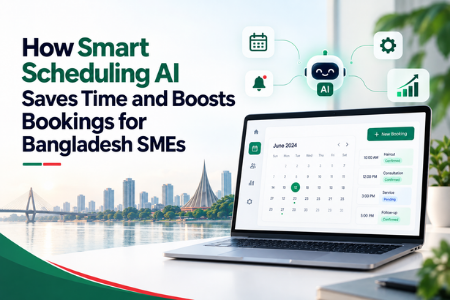
Automation is no longer limited to developers. In 2026, no-code automation software allows businesses to automate workflows, connect apps, manage leads, and streamline operations without writing a single line of code. From marketing automation to AI-driven customer conversations, these tools help companies save time, reduce manual work, and scale faster.
Below are some of the best no-code automation software platforms in 2026, covering everything from workflow automation to AI-powered business operations.
1. PowerinAI
PowerinAI is an AI automation platform designed to help businesses automate customer communication, lead management, and sales processes. Instead of managing separate tools for messaging, CRM, and follow-ups, PowerinAI brings everything into a single system.
Businesses can automate conversations across multiple channels such as WhatsApp, email, social media, and website chat while maintaining a unified customer profile. The platform also supports AI chatbots, automated follow-ups, appointment scheduling, and lead tracking. This allows companies to respond to customer inquiries instantly and nurture prospects automatically without manual effort.
For businesses that want to automate sales and customer support workflows without building complex systems, PowerinAI provides an all-in-one solution.
2. Zapier
Zapier remains one of the most popular no-code automation tools in the world. It allows users to connect thousands of applications and automate workflows using simple trigger-and-action rules. For example, businesses can automatically send leads from a form to a CRM, create tasks in project management tools, or trigger email campaigns.
One of Zapier’s biggest strengths is its massive integration ecosystem. With connections to thousands of apps, businesses can automate processes across marketing, sales, finance, and operations without writing code.
3. Make
Make (formerly Integromat) is a powerful visual automation platform that allows users to build complex workflows using a drag-and-drop interface. Instead of simple trigger-action automations, Make enables multi-step logic, branching conditions, and data transformations.
The visual canvas makes it easy to map how data moves between different apps and services. Because of this flexibility, Make is often preferred by teams that want deeper workflow control without coding.
4. n8n
n8n is a rapidly growing workflow automation platform known for its flexibility and open-source approach. Businesses can automate tasks between apps using a node-based visual interface while maintaining full control over their workflows.
One of the biggest advantages of n8n is that it can be self-hosted, giving companies complete control over their data and automation infrastructure. This makes it attractive for organizations that prioritize privacy and customization.
5. Microsoft Power Automate
Microsoft Power Automate is part of the Microsoft ecosystem and is widely used by companies already using Microsoft 365. It allows users to automate workflows across Microsoft apps like Outlook, Excel, SharePoint, and Teams.
Businesses can build automated approval flows, document processing pipelines, and data synchronization workflows. Because of its deep integration with enterprise tools, Power Automate is especially popular among corporate teams and large organizations.
6. Activepieces
Activepieces is an open-source no-code automation platform designed to compete with tools like Zapier and Make. It offers a visual workflow builder that allows users to automate tasks across multiple applications.
One of its biggest advantages is flexibility. Businesses can self-host the platform or use the cloud version, making it suitable for companies that want automation without depending entirely on third-party services.
7. Airtable
Airtable combines the functionality of spreadsheets and databases with powerful automation features. Businesses can build custom workflows that automatically trigger actions based on data updates.
For example, when a new lead is added to a database, Airtable can automatically assign tasks, send notifications, or update CRM records. Its flexibility makes it ideal for building internal tools, managing projects, and automating business processes.
8. Notion
Notion has evolved into a powerful workspace platform with automation and AI capabilities. Businesses use Notion to manage knowledge bases, project workflows, documentation, and team collaboration.
With built-in automation features, teams can trigger actions when tasks change status, update project pipelines automatically, and generate AI-assisted content within workflows.
9. Monday.com
Monday.com is a popular work management platform that includes strong no-code automation capabilities. Teams can automate repetitive tasks such as status updates, task assignments, deadline reminders, and reporting.
Its visual dashboards and workflow builder make it easy for non-technical teams to automate operations without needing IT support.
10. UiPath
UiPath is one of the leading platforms in robotic process automation (RPA). While traditionally used by developers, its newer tools provide low-code and no-code capabilities that allow business users to automate repetitive tasks.
Organizations often use UiPath to automate processes such as invoice processing, data entry, compliance workflows, and document handling, significantly reducing manual workload.
Final Thoughts
No-code automation tools are transforming how businesses operate in 2026. Instead of relying on developers for every workflow change, teams can now design and deploy automation themselves.
Platforms like Zapier and Make focus on connecting apps, while tools like Power Automate and UiPath help automate enterprise processes. Meanwhile, AI-driven platforms like PowerinAI are pushing automation even further by combining workflow automation with conversational AI, lead tracking, and customer engagement.
As businesses continue to adopt automation, the companies that learn to design efficient workflows without technical barriers will gain a significant competitive advantage.